
Hot Tub Winter Care Guide
CENTRAL VIRGINIA HOT TUB CARE
Winterize Your Hot Tub or Keep It Running?
How to choose before the first freeze—and what to check if you plan to keep soaking.
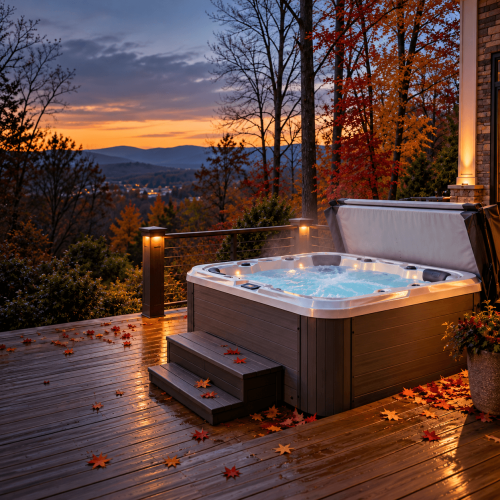
The short answer
There is no need to close a healthy hot tub just because the pool season is over. If you use it through winter, keep it filled, powered, circulating, and heated. If you expect to leave it unused and unattended for weeks, have it properly winterized before freezing weather.
The risky middle ground is turning off the power and draining what you can see. Water may still be sitting in a pump, heater, or line. When it freezes, those parts can crack.
Around Charlottesville, Richmond, Henrico, and Fredericksburg, a warm fall afternoon can make winter seem far away. It is easier to make the decision now, while there is time to fix a tired cover or a heating fault.
If you plan to keep soaking
The first cool evening is often when a hot tub earns its place in the backyard. You can use it in winter, provided it is working properly and someone is paying attention to it.
Start with the cover. Does it sit flat and close securely? Has it become unusually heavy, torn, or waterlogged? A poor seal lets heat
escape, and a damaged cover deserves attention before temperatures drop. Clear fallen leaves from it gently; don’t treat it as a platform for storing anything.
Run your hand along the closed edge on a cool day. A visible gap, broken strap, or skirt that no longer reaches the cabinet is worth
fixing. A cover that feels much heavier than it used to may have absorbed water; cleaning its outer surface will not restore the
insulation inside.
Next, check the water level and the display. Keep the water at the level specified in your manual. If you see a flow warning or notice that the spa is not heating, investigate it promptly. A clogged filter or low water level can interrupt circulation and heating. Clean the filter on the schedule for your model.
For example, a spa may show its set temperature while the actual water temperature falls. Check the current reading, not
just the number you selected. A persistent flow warning, weak circulation, or water that keeps cooling needs attention before a
freezing night. The Luxury Pool & Spa service page specifically asks owners to read the manual and clean filters when troubleshooting; a dirty filter can stop a spa from working properly. If cleaning it does not clear the fault, do not repeatedly
reset the breaker and leave the spa unattended.
Keep an eye on the water
Cold weather does not remove the need to care for the water. Test it regularly and follow the instructions for your sanitizer system. The CDC recommends at least 3 ppm chlorine or 4–8 ppm bromine, pH of 7.0–7.8, and a water temperature no higher than 104°F. Your product and spa manuals provide the directions for adjusting your particular system. Avoid combining products or adding a dose based only on how the water looks.
Test before a soak, especially after a gathering. Clear water alone does not tell you whether the sanitizer is adequate. The CDC
notes that test strips are less accurate than a DPD test kit and that a very high chlorine level can even cause a falsely low reading on some tests. If a result seems implausible, confirm it with an appropriate test rather than adding more product blindly. Follow the label and allow the water to reach the required range before anyone gets in.
If a drain and refill is already due, choose a mild day. Give yourself enough time to refill, heat, test, and balance the water before an overnight freeze. How often water needs changing depends on use and the water care system; fall itself is not a reason to dump otherwise healthy water.
Plan for the days you are away
Finally, think about travel. Who could check the power, cover, water level, and display while you are gone? If no one can respond to a fault during a long absence, keeping the spa running may be a poor bet.
Give that person the model name, the location of the breaker, and a service contact. A photo of the normal display can make it easier to recognize a new fault. This is especially useful for a second home or a holiday trip, when a missed heating failure might otherwise go unnoticed for days.
If you will leave it unused
Winterization means removing water from the parts that could freeze, not merely emptying the seats and footwell. Jacuzzi’s guide addresses the shell, filters, pumps, heater, and jet lines; the exact procedure depends on the model.
For an owner assessing a winterization job, the useful question is which parts were cleared. A model-specific procedure
generally includes disconnecting power, draining the shell, removing and caring for the filters, clearing water from the pump and heater, clearing jet plumbing, drying the shell, and securing the cover. Ask whoever performs the work to explain the steps for your model, what remains open or disconnected, and how to restart it in spring. There should be no guesswork about whether the heater or a low section of pipe still holds water.
Use your owner’s manual. If you cannot identify all the drains and plumbing, or you have a swim spa with a more involved system, arrange service from someone who knows the equipment. A shell that looks dry tells you little about the water inside it. Never switch an empty spa back on; follow the refill and restart procedure in its manual.
Do not assume every spa should be winterized simply because temperatures will fall. A working spa that is used and monitored can remain in service. Conversely, an unused spa with a failed heater is not protected just because the cover is closed. Resolve the fault or have the system properly shut down before a freeze.
How to decide
Your plans matter more than the month on the calendar.
| Your plans | What to do |
|---|---|
| You soak often and can keep an eye on the spa | Keep it running and maintain the water, cover, and circulation. |
| You will be away, but someone can check it and respond to a problem | Decide with that person what to check and whom to call if a fault appears. |
| You will leave it unused and unmonitored for much of winter | Arrange model-specific winterization before freezing weather. |
| It already has a heating, pump, or control fault | Get the fault addressed before depending on it through cold weather. |
What if the power goes out?
Close and secure the cover, then check the weather and the expected length of the outage. There is no safe universal countdown: the water’s starting temperature, the outdoor temperature, insulation, and the plumbing layout all matter.
If power may stay off while temperatures are below freezing, call your dealer or a qualified spa technician for advice for your model. Do not improvise with an electrical heater in the equipment compartment. When power returns, check that circulation and heat resume and that no fault remains on the display. If you suspect a line has frozen, do not run the pumps until it has been inspected.
A common mistake is draining the visible water during an outage and assuming the spa is safe. That can leave small volumes trapped in the least visible, most vulnerable places. Keep the cover shut while you arrange model-specific advice; do not make a hurried partial drain your freeze plan.
Get the answer for your spa
The right winter plan depends on the equipment you own and whether
you can keep an eye on it. If you have a heating or flow fault, send Luxury Pool & Spa a service request with the brand, model, current and set temperatures, any error code, and what you have already checked. Its service page confirms hot tub diagnostics and repair, replacement covers, parts, and maintenance advice.
Ask whether winterization is available for your specific model and location; that service is not listed there. The company has locations in Charlottesville, Richmond/Midlothian, Henrico, and Fredericksburg. For routine supplies, see its water care products.
Four Central Virginia locations
Open Monday–Friday 10–6 and Saturday 10–5:
- Charlottesville — 257 Connor Dr A · (434)
202-2331 - Fredericksburg — 9755 Patriot Hwy · (540)
710-9700 - Midlothian / Richmond — 2045 Walmart Way · (804)
794-7721 - Henrico / Short Pump — 3426 Pump Rd · (804)
364-3577
See current contact details and hours on the service page.
Frequently asked questions
Yes, if it is fully winterized first. Turning off a filled spa, or draining only the shell, leaves equipment vulnerable to freezing. If you would rather use it through winter, see our guide to hot tub electric bills for the factors behind operating costs.
Yes, if the spa is operating and the water is properly maintained. Keep the path and steps clear, put the cover back on promptly, and check the temperature before getting in. The CDC advises a maximum water temperature of 104°F, showering beforehand, and avoiding alcohol before or during use.
It can be. A swim spa may have different plumbing and equipment from a small hot tub. Follow its own manual, especially if you plan to shut it down.